Day 15: People (in General)

crowdPeople are great to have around. I say I’m grateful for people in general because, for one thing, there are a few specific people I’m not so grateful for, but also because I realize I have a tendency to digress into snarkiness from time to time (purely by accident) and I don’t want to end up hurting anybody’s feelings when I’m trying to say how grateful I am that they exist.

I really need to be among crowds of people on a regular basis. When we moved from Boston to Durham, NC, Karen was very sweet to be concerned about how I would still get to mingle with crowds in such a small city. After all, I wasn’t going to be riding the T at rush hour any more. As it turned out, going to the mall was a good thing. And I found work at SAS, where the company cafeteria was pretty well seething with people, so that worked out well.

I get a really good energy from crowds of people–I just love seeing all the different sizes and shapes they come in, and the things they decide to wear, and overhearing what they have to say to one another. I’m not judgmental–they’re all good. I just want to be around them.

And people are generally very well behaved. You read so many letters in the paper about this or that person who was rude to the writer in the checkout line, or cut them off in traffic, or brought an extra guest to a party when the host deliberately bought just barely enough sandwiches for the 8 people he grudgingly included in the first place. That stuff’s nothing! No big deal! Just let it go!

Consider for a moment a trip to the mall, or a crowded supermarket. You are mingling up close with hundreds or even thousands of total strangers, many of them (if you’re in the South like I am) heavily armed. And even if they aren’t armed, there’s a whole rack of razor sharp chef’s knives right there on aisle 8 (cookware). And I hate to think of the mayhem you could commit with some of the stuff on aisle 14 (outdoors and barbecue). Yet no one is going on a killing spree. Yes, you read about shooting sprees sometimes, but how many, compared to the number of times you’ve been in a crowded store?

I’ve never even had anyone shove me or call me an ugly name at the mall. I dropped a pair of gloves in the Copley Place mall in Boston (Boston! The American epicenter of rudeness!) and a passerby called out, “Hey buddy, you dropped your gloves.” How nice is that?

I think they should have a sign in the Kroger that says “It’s been 6,205 days since our last lethal rampage. Happy shopping!” Just to remind us to be grateful.

Day 14: Constraints on Capitalism

moneyBoy, am I glad we have some constraints on capitalism! As an economic system capitalism is all well and good, don’t get me wrong. It certainly seems to me there’s a lot of people who wouldn’t even get out of bed in the morning if it weren’t for the prospect of getting paid by some running dog of capitalist imperialism or another, and it would be a shame to go to the office and miss their smiling faces day after day. But like an overpowered muscle car, you definitely want to be sure you can control it before you crank it up and see what it can do.

The hope of making a profit spurs people on to innovate and create. This is why no great books ever came out of the Soviet Union, for example, and why musicians and artists are invariably wealthy. And who can forget the vast estates, yachts, and extravagant lifestyle of Nikola Tesla? But there have to be some limits. Innovators are all well and good, but we have to make sure the system is controlled and redistributive measures are in place to keep bankers and insurance company executives (and their poor families) from starving.

Although actually, when you come right down to it, why do we want to encourage innovation, anyway? It seems to me the whole history of innovation since the start of the Industrial Revolution has been one of putting people out of work. Let’s face it, innovators aren’t job creators, they’re job destroyers. For example, did you know that it took 6 times as many workers to harvest a given acreage of wheat before the invention of the combine as it did afterwards? Whenever you hear someone touting a new development as increasing personal productivity, think to yourself, there’s another 5 guys who used to have a job who are now scratching their heads and wondering what they did wrong. They can’t all drive the combine. There’s no room, for one thing. Just one seat.

But I digress, this is about constraints on capitalism, not on innovation. If constraining capitalism happens to constrain the kind of innovation that makes perfectly decent people redundant, well, that’s just a happy side effect.

The main constraint on capitalism that I love is government regulation. Left to its own devices, capitalism will go out and do whatever maximizes profit. Let me repeat that with emphasis: It will do whatever maximizes profit. For example, selling people highly addictive yet carcinogenic products, baby formula stretched with melamine, cars that are unsafe at any speed, and pyramid investment schemes. Now, all of these might be counted on to limit themselves through the power of the invisible hand, but only after huge numbers die of horrible cancers, babies are poisoned, cars blow up, and people lose their life’s savings.

Government regulation means that capitalism’s get-rich-quick schemes are constrained by a force that’s fair, one where everyone in the system has equal say regardless of their value to the capitalistic system itself–in other words, an external force that can’t get swept up in the heady rush of turning a profit and forget to think about whether it really ought to be doing this. After all, one thing that capitalism simply can’t buy is votes.

Oh, wait.

Day 13: New Earth

earth

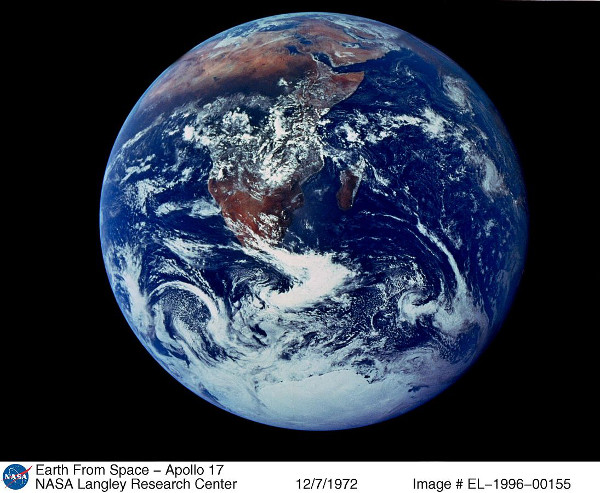
Of course, Old Earth was better, when we were younger and everyone still lived there. But when they realized that giant asteroid was coming to destroy the planet and they evacuated us all to New Earth, we never expected it would be this nice. And it’s almost the same, really. You have to know exactly what to look for to spot the differences.


The gravity’s a little heavier here on New Earth, and the sun’s a little hotter. And if you look carefully at the stars at night you can see we’re not quite where we used to be. Which is why there’s so much light pollution now, so you can’t see the stars very well. Keeps the masses from noticing.

Not that it would be that big a deal if they did notice, mind you. I mean, they all knew when we were evacuated, but the government was able to distract them with new TV shows like Downton Abbey and Game of Thrones, and the elections and other political shenanigans, and they forgot pretty quickly. So if they do notice that this planet somehow has dogs that look like pandas and deep sea fish that look like Abe Vigoda, and some dim memory stirs that it wasn’t always that way, they’ll forget again soon enough.

Oh, you say you don’t remember Old Earth and the evacuation? Look, something shiny!

Day 12: Science

science

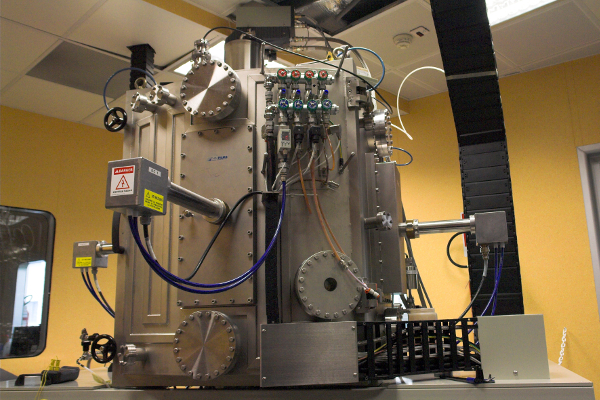
There are so many reasons to be grateful for science. I could start by mentioning the titanium rod that still lives inside my left leg that enabled my tibia to heal in something like the shape and size it was before it was smashed, and in fact all the other wonderful devices that kept me alive while my body recovered from its injuries almost 10 years ago now. I could mention the computer I’m using to write this blog, and all the other computers whose existence means I have the job I have, instead of one teaching Latin to high schoolers in Pascagoula. I could talk about whatever the heck the thing in the picture above is, if I knew what it was. I could talk about the airplane that safely flew my sweetie off to New York this morning when everyone else in their right mind was hoping against hope that they would be able to fly away from New York.

But all of that is technology, and what I’m really grateful for is science! Technology is a product–sometimes just a by-product–of science. Science isn’t the stuff that scientists figure out how to make, or the stuff they use to figure out how to make the other stuff they figure out how to make. Science is the activity they practice. It is the systematic study of events, and substances, and systems; the development of hypotheses to explain them; the rigorous testing of those hypotheses; and the rejection of those hypotheses that are found faulty and the refinement of those that are borne out.

If you want to know what a world without science would look like, thanks to the Internet, you don’t have to look very far. Listen to some speeches by Republican congressmen on the topics of global warming, human female reproductive systems, and the environmental impacts of petroleum exploration and extraction. Watch YouTube videos on chemtrails, snow that doesn’t melt, perpetual motion machines that really work, and levitation. Read some spam about penis enlargement pills, strange new intestinal parasites that may be preventing you from losing weight, and the berry that big pharma doesn’t want you to know actually cures cancer.

Then ponder for a moment that awesome fact that none of these things would exist if there weren’t (to borrow a phrase from Carl Sagan) millions upon millions of people who believe them, in the absence of anything approaching scientific evidence. They’re the world without science. I’m grateful for the rest of the world.

Day 11: Urban Wildlife

owlIt’s all well and good to travel for hours on an airplane to get to some exotic locale, and then ride in a jeep or on horseback or be carried piggyback by native sherpas deep into the wilderness to get a fleeting glimpse of the greater-spotted pugmoose in its native habitat, but one expects to be thrilled and excited by that. It goes with the territory, as it were.

I’m grateful for the urban wildlife that surrounds us, the wildlife whose native habitat is also our native habitat. For example, when I lived in Boston, a friend of mine told me about the night she ran out to drop a bag of garbage in her apartment building’s dumpster, and just as she was hoisting the bag to shoulder height to drop it in, she heard something moving and stopped to see what it was she was about to squash with her kitchen scraps, grease-soaked paper towels and used tissues. “Oh dear, there’s a kitty stuck in the dumpster,” she said she thought, until the moonlight caught the white stripe running down its back.  She just put the garbage bag down gently beside the dumpster and tip-toed away. But she thought it was pretty cool, nonetheless, and so do I.

We have barred owls in our neighborhood in Decatur. Those are the ones whose cry sounds like “who? who? who cooks for you?” Well, that’s one of their cries. They also make a sound like a couple of banshees locked in contest to see which can strangle the other to death. It’s very romantic. Especially since they’re loud as hell. I was out soaking in the hot tub on our back deck one winter evening when one of the damned birds flew over about 10 feet above my head. Wingspan like a B-52, screaming “WHO COOKS FOR YOU!?”

“I cook for myself,” I cried, “please don’t kill me!” It’s a wonder we have any rodents in the neighborhood for them to eat. If I were a rodent I would have had a heart attack or moved into the safety of the Kroger loading dock ages ago.

There was a bit of a coyote scare last year, with people attributing all sorts of mischief to them. Missing cats, stolen bicycles, kids turning to drugs. Coyotes just seem to be a bad influence, although really, they mainly just eat rodents, too. I thought they were an urban myth, but one morning I had to drive to the airport at 5:00 AM, and as I pulled out of the garage, I saw something that looked like a miniature German shepherd slinking out of the neighbor’s backyard with its tail held out horizontally behind it. Coyote. How cool is that?  For some reason the urban coyotes around here don’t howl at the moon, though. I think they’re afraid of the owls.

We have red-tailed hawks in the nabe, too. Beautiful creatures to see circling high overhead, and majestic-looking when you spot one on the top of the church steeple (a favorite lookout spot) a couple of blocks down the street. Their young are obnoxious, though. They screech non-stop from dawn until dark. They literally do not seem able to exhale without screaming. And they don’t like to fly. We watched one in our backyard jumping from the ground to a low tree limb, and then to a higher limb, and then to a higher one, until it was about 20 feet off the ground, at which point it spotted a squirrel on the ground and fell on it.  The squirrel was merely stunned, and the baby hawk (I say baby, but it was bigger than a good-sized chicken) had to jump up in the air and land on it several more times before it was sufficiently dead to be eaten. At which point Baby just screamed for Mom until she came and tore it up into convenient bite-sized chunks for him.

Why am I grateful for all these creatures? Ask yourself what they have in common: they eat squirrels. And what do squirrels eat? My house.

Day 10: Sex


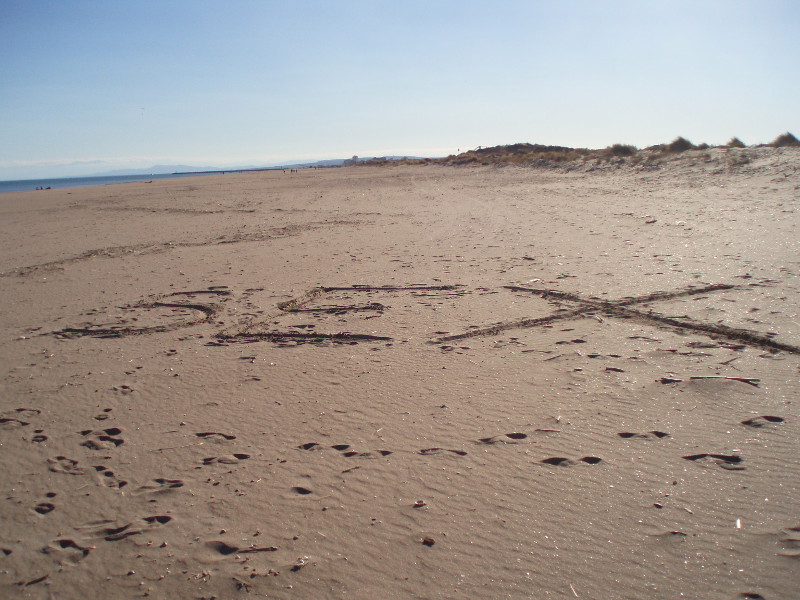
OLYMPUS DIGITAL CAMERAYou might think this one would go without saying. You might even think it should go without saying, but it’s too late for that, I already said it. I’m grateful for sex.

That comes out kind of creepy, doesn’t it? Like I’m pathetically grateful for getting a chance to do it. I didn’t mean it like that, honest! Let me give you some back story. As it were. (God, once you start out with a title like “Day 10: Sex” everything sounds like a double-entendre, doesn’t it?)

This past week the Rev. Bryant Wright delivered a devotional address to our Georgia legislators in which he decried the current trend of valuing “erotic liberty” over religious liberty. And by erotic liberty he seems to mean treating homosexuality (and any other form of sex that’s abhorrent to him) as anything but a perversion, and attempting to protect homosexuals (and anyone else whose sexuality is abhorrent to him) from discrimination in public services and accommodations.

So I’m writing today to say that I’m grateful for sex in general, and in all its forms, so long as all participants are capable of giving informed consent and have done so. (Note to students at private liberal arts colleges: in your case this may actually require you to fill out forms in triplicate and have them notarized. Do not despair: with sufficient imagination and a sense of humor, this too can become part of romantic and arousing foreplay.)

Sex is as natural and necessary as eating, and sleeping. (I don’t say as necessary as breathing or drinking, because I’ve gone longer than 3 days without having sex, and you can’t go that long without water, or longer than 2 minutes without breathing, but I digress.) At times it allows us to feel cherished, comforted, and deeply bonded to another; at times it allows us to feel vital and exciting; at times it allows us to feel dirty and primitive and wallow in our animalistic urges without doing anyone any real damage; and if you’re doing it right, all those can happen at the same time.

Why on earth would you tell anyone they can’t have those things unless they can get them from the exact same combination of body parts, words, and acts that you get them from? I’m mystified. So today I’m here to say, I’m totally grateful for sex, and you should be too! Go get some as soon as you can! You can even do it all by yourself, if need be, or if that’s what you like best.

Day 8: Lunch

640px-Dirty_Lunch_Counter
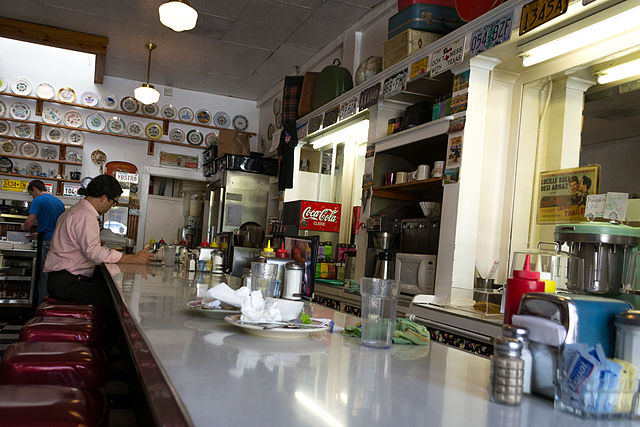
“Dirty Lunch Counter” by Visitor7 – Own work. Licensed under CC BY-SA 3.0 via Wikimedia Commons – http://commons.wikimedia.org/wiki/File:Dirty_Lunch_Counter.jpg#mediaviewer/File:Dirty_Lunch_Counter.jpg

I didn’t get to eat lunch today. There was a lunchtime meeting that they neglected to tell me I was supposed to attend until the last minute, and there wasn’t any food provided. So naturally my thoughts all afternoon turned to the subject of lunch, and what a good thing it is. Here’s some lunch things to be grateful about:

You can eat a big lunch and it won’t keep you up all night the way a big dinner does. Or at least, a big dinner keeps me up all night. You may be impervious to the perils of a big dinner. Or young, which amounts to the same thing.

Lunch time at work is usually my “me” time. I get something to eat and I sit downstairs in our enormous break room with a concrete floor that’s painted in big swirls of gold glitter for reasons that remain obscure and read an electronic book while I eat and just ignore the rest of the world.

There’s a lot of good restaurants near my office, because it’s in downtown Decatur. There’s the Brick Store Pub, Andryannis Greek Bistro, Victory Sandwich, and lots more. There’s also Souper Jenny’s right across the street, which is just the place to go if you want a seven-dollar bowl of soup and a roll served cafeteria style. But as often as not, I just buy something in the aforementioned break room, which is named “the Breakaway Café” despite the fact that no one serves coffee there, and there isn’t even a kitchen. What there is, is a counter where two catering vendors alternate days serving a limited menu of buffet foods.

The Monday-Wednesday caterer serves modern southern fare, so I often get chicken wings and two vegetables (usually collards and green beans). You can tell it’s southern fare because the vegetables include macaroni and cheese, potato salad, and a broccoli rice casserole that consists of rice and melted cheese with a small scattering of green bits in it.

The Tuesday-Thursday caterer serves wraps that are partly pre-made, then finished off on order and toasted on an industrial-grade George Forman grill. My particular favorite is something I believe is called a Chicken Seizure wrap, although I’ve been eating those things for months and haven’t even felt a twitch. They also do a cheeseburger wrap, which allows you to feel you’re being healthy by having a wrap, but it’s filled with ground beef, cheese, lettuce, tomatoes, mayonnaise, ketchup, and mustard, so it also tastes really good. Plus there’s chips.

Day 7: The Miracle of Fermentation

yogurtBillions upon billions of tiny selfless organisms make the ultimate sacrifice every day to bring humankind delicious and healthful things to eat and drink, ranging from bread to beer to whiskey to that pinnacle of the fermentative arts, yogurt. (And cheese, but as always, the cheese stands alone.) I tip my hat to them in gratitude. Your sacrifice is not in vain.

(For those of you in the UK who are wondering, whiskey is almost the same as whisky, only better.)

I’ve made lots of bread. I haven’t ever made beer myself. I’ve made sima, a Finnish midsummer drink similar to beer, and I’ve made some truly terrible mead which I then distilled into a really good honey-flavored moonshine-like concoction that I occasionally pull out and put into a cocktail. I have to say distillation is also something to be grateful for, and despite how it’s portrayed in movies, it’s pretty easy to do with common kitchenware, as long as you aren’t trying to produce industrial quantities of liquor. Which would be illegal, so don’t do that. I strongly advise against it. In fact, forget I said anything about it.

If you want to make your own yogurt, the very same yogurt I make to feed my incredible body and make it feel good, here’s how.

You’ll need:

  • A half gallon of organic milk (I use 2%, sometimes whole milk. Steer clear of skim.)
  • A starter culture (after the first batch, this will be your own culture. I started my first batch with a 7 oz container of Fage 2% plain Greek yogurt. Whatever you use, make sure it says it has an active culture. Unlike Iowa City.)
  • A 3-quart pot with a lid
  • An instant-read thermometer (I have a nice digital one that my friend Gayle gave me, but the analog kind works, too)
  • 2 1-quart mason jars
  • 1 8-oz mason jar
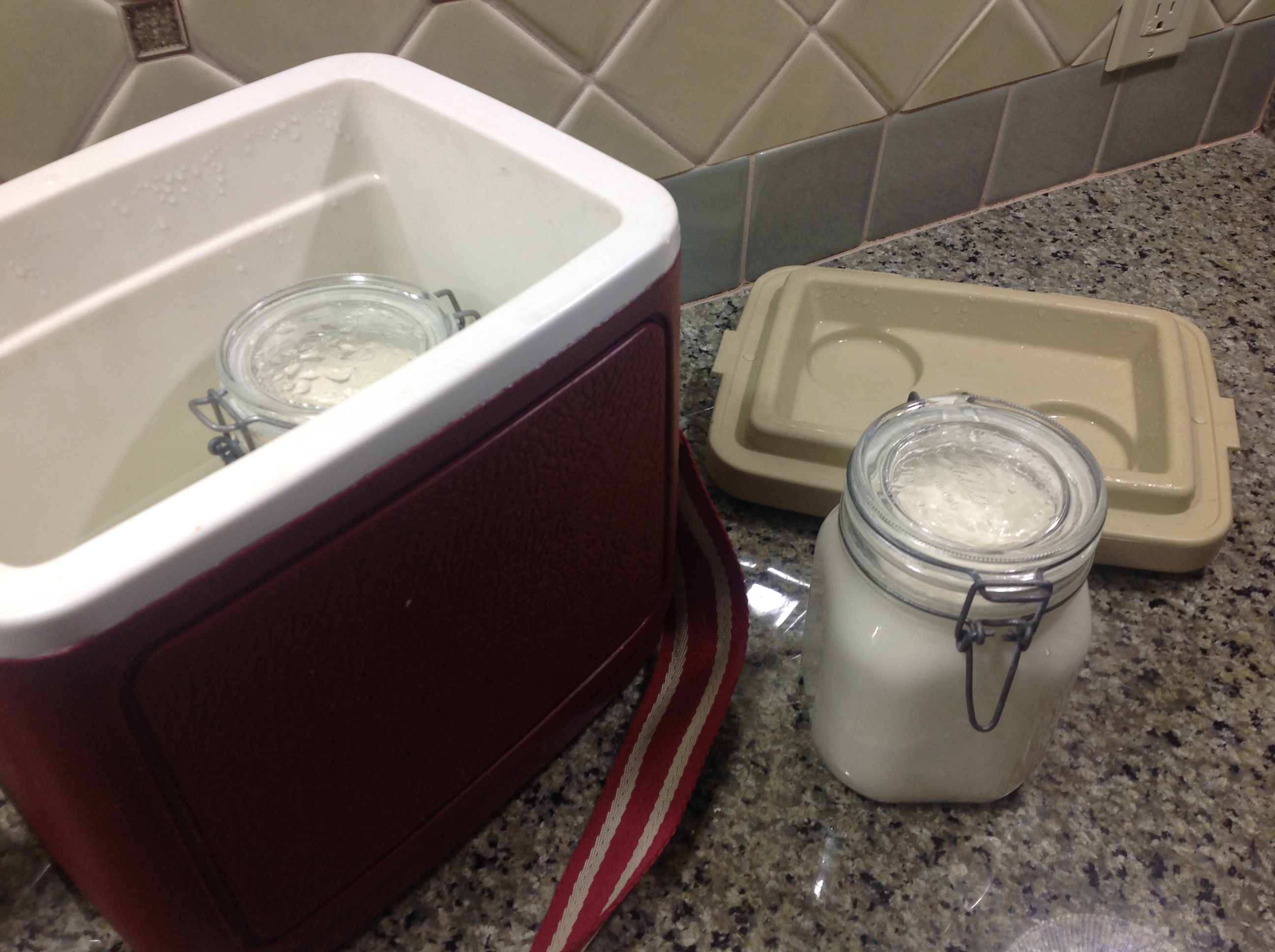
  • A small cooler that the 2 1-quart jars will fit into (See the picture.)
  • A tea kettle
  • A spoon

Pour the milk into the pot, clip the thermometer onto it (and if it’s a nice digital one, set the alert to 180 degrees F), put the lid on as best you can with the thermometer in there, and set it on low heat to warm up to 180 degrees F.

While that’s heating, put the kettle on to boil.

When the kettle boils, use the water to scald out the mason jars and sterilize the spoon.

Fill the cooler with hot water (as hot as you can get it) from the tap and set it aside.

Stir the milk occasionally with the sterilized spoon.

Fill the kitchen sink to a depth about half that of the 3-quart pot with cold water (as cold as you can get) from the tap.

When the milk gets to 180 degrees F, take the pot off the heat and move it into the cold water in the sink. Stir with the spoon until it cools to 120 degrees F.

Move the pot back to the stove top, no heat, and stir your starter culture into it thoroughly.

Pour the mixture into the mason jars and close them.

Dump almost all the water out of the cooler. You want enough left to immerse the mason jars into without it coming up to the lips of the jars (otherwise as they cool they may suck water into the yogurt. Yuck.)

Test the water temperature in the cooler. It should be 120 degrees F. Adjust by adding hot or cold from the tap and bailing out the extra until you have the right amount at the right temperature. (Here’s a tip: you can pre-measure and mark the desired water level on the inside of the cooler with a pencil. Bet you wish I’d mentioned that up above.)

Immerse the mason jars into the 120 degree water, close the cooler, and wait 24 hours. (Tip: you can wait in another room.)

After 24 hours, you technically have yogurt, but DON’T spoon any of it out yet!  For some reason, this breaks the yogurt and it doesn’t set up nicely or taste quite as yummy. Instead, move it to the refrigerator and wait another 24 hours.

Spoon 8 oz of the yogurt into the 8-oz mason jar (bet you forgot all about the 8-oz mason jar!) to be your next starter culture.

Now eat some yogurt! With granola, blueberries, sliced peaches, or whatever. Can also be mixed with horseradish, Coleman’s mustard, and cayenne to make an excellent sauce for roast beef. Or a dozen other uses you might not suspect if you haven’t made a habit of producing a half gallon of yogurt every week.

(Final tip: because I don’t have much patience for waiting to eat my yogurt while it cools down, I make a new batch as soon as I’m down to one 1-quart jar.)

I hope some of you are inspired by this to make some homemade yogurt. Let me know how it goes!

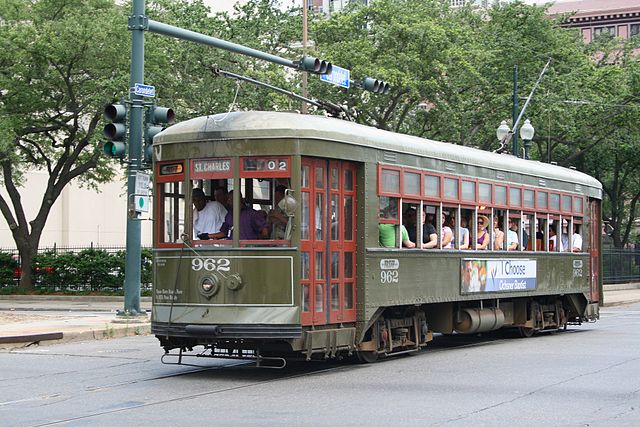
Day 6: Growing Up in New Orleans

"Streetcar in New Orleans, USA1" by Poco a poco - Own work. Licensed under CC BY-SA 3.0 via Wikimedia Commons - http://commons.wikimedia.org/wiki/File:Streetcar_in_New_Orleans,_USA1.jpg#mediaviewer/File:Streetcar_in_New_Orleans,_USA1.jpg
“Streetcar in New Orleans, USA1” by Poco a poco – Own work. Licensed under CC BY-SA 3.0 via Wikimedia Commons – http://commons.wikimedia.org/wiki/File:Streetcar_in_New_Orleans,_USA1.jpg#mediaviewer/File:Streetcar_in_New_Orleans,_USA1.jpg

This is a big one, for me. My parents are both from Birmingham, Alabama, a city we visited every Christmas and most summers when I was a kid. Not like Birmingham today, which I understand is perfectly pleasant. This was the Birmingham where they lit the streetlights in the daytime because there was so much smoke in the air you couldn’t see, where a white shirt would turn grey in an hour outdoors, where the skies glowed like those of Mordor all night long. I might have been born and raised there. Or in Iowa City, where they later lived. The less said about that alternative reality the better.

But I wasn’t. So instead I grew up on a beautiful Uptown street lined with live oaks, watched (and occasionally, second-lined) jazz funerals going past on their way to the cemetery where I sometimes flew kites with my childhood buddy John (because there were no overhanging trees there to catch them), ate some of the world’s best fried food and heard some of the world’s best music. It was New Orleans that taught me the vital life lesson that if a thing’s worth doing at all, it’s worth doing later, preferably with a drink in your hand.

The Theory of Not-Quite-Everything